
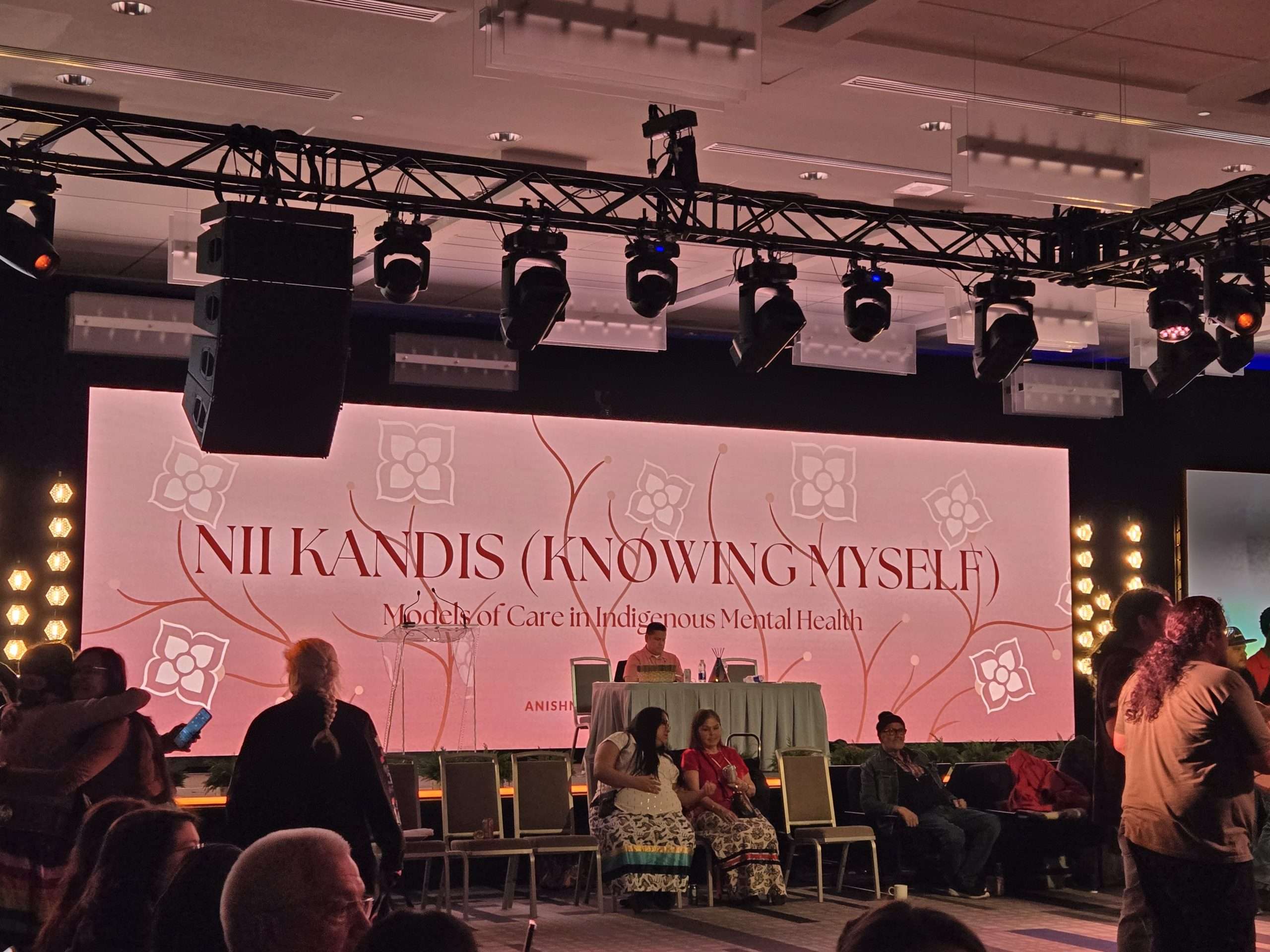
Earlier this month, Nellie’s case management worker Joanna Shawana had the opportunity to introduce several of the women at the shelter to the Round Dance, a deeply meaningful tradition in Indigenous communities. The event was part of a conference hosted by Anishnawbe Health Toronto called Nii Kandis (Knowing Myself): Models of Care in Indigenous Mental Health. Focusing on Indigenous identity, culture, and spirituality in mental wellness, this was their inaugural Indigenous mental health conference.
“This experience was incredibly rewarding,” explained Joanna. “It allowed the women to participate in their first Round Dance event, where they embraced the spirit of the gathering through movement, connection, and joy.”

The Round Dance holds great cultural and spiritual significance. It’s a traditional ceremony and social gathering that symbolizes unity, healing, remembrance, and celebration of life. Often held in the winter months, it brings people together to honour ancestors, connect with one another, and celebrate shared traditions. Joanna shared with us more details about the purpose and symbolism behind the event:
- Healing and remembrance: The Round Dance provides a space for individuals to heal, mourn losses, and remember loved ones.
- Celebration of life: It serves as a joyful occasion to honour traditions and the interconnectedness of the community.
- Social gathering: The dance offers an opportunity for people to share stories, build relationships, and strengthen their sense of belonging.
- Honouring ancestors: Many believe that during the dance, ancestors join in, dancing alongside the living.
- Symbolism of the circle: The circle represents the unity and interconnectedness of all life, reinforcing the importance of community support and togetherness.
Joanna was thrilled to see how powerful this experience was for the women, many of whom told her that they found the dance to be both uplifting and transformative. “I enjoyed myself, and I would like to attend another event — I loved the dancing,” said one of the Nellie’s attendees.

“The positive response from the women at the shelter highlights the importance of cultural activities in fostering healing and empowerment,” said Joanna. “Moving forward, I hope to continue organizing opportunities for them to participate in traditional events, helping them build connections and experience the healing power of community and culture. This experience reaffirmed the strength found in Indigenous traditions, and the importance of sharing them with those who can benefit from their deep sense of belonging and healing.”
Thank you, Joanna, for all you do for the women and their children living at Nellie’s. We’re so fortunate to be able to learn from you!