

When six-year-old Henry* first arrived at Nellie’s with his mother, he had a lot of restless and unfocused energy. “The other kids couldn’t even match his energy,” explains Adheena Jose, our Child & Youth Program Coordinator. “He would run around, tear up papers, and need constant redirection, making group activities challenging for everyone.”
Henry had attention-deficit/hyperactivity disorder (ADHD) and, when he arrived at the shelter, was already attending a specialized day program for children with complex needs. With this knowledge, Adheena realized that in order to best support him, she needed to shift her approach to working with Henry to match the types of activities he participated in at his day program and the strategies that worked for him there. “Our goal was to create consistency and structure between what he was experiencing in his day program and our program here at Nellie’s,” Adheena explains.
When children come to Nellie’s, our job is to make them feel safe, cared for, and at home. We know how important it is for children to be able to process their experiences in age-appropriate ways, while also having plenty of opportunities to just be kids. Over the last few years, Adheena has seen many children arrive at Nellie’s with complex needs, including autism spectrum disorder, attention-deficit/hyperactivity disorder (ADHD), and other emotional and behavioural challenges. “We try to understand these behaviours as a form of communication — not as deviance or disobedience,” she explains. “Building trust has to come first. Once a child feels safe, we can support any behavioural needs.”
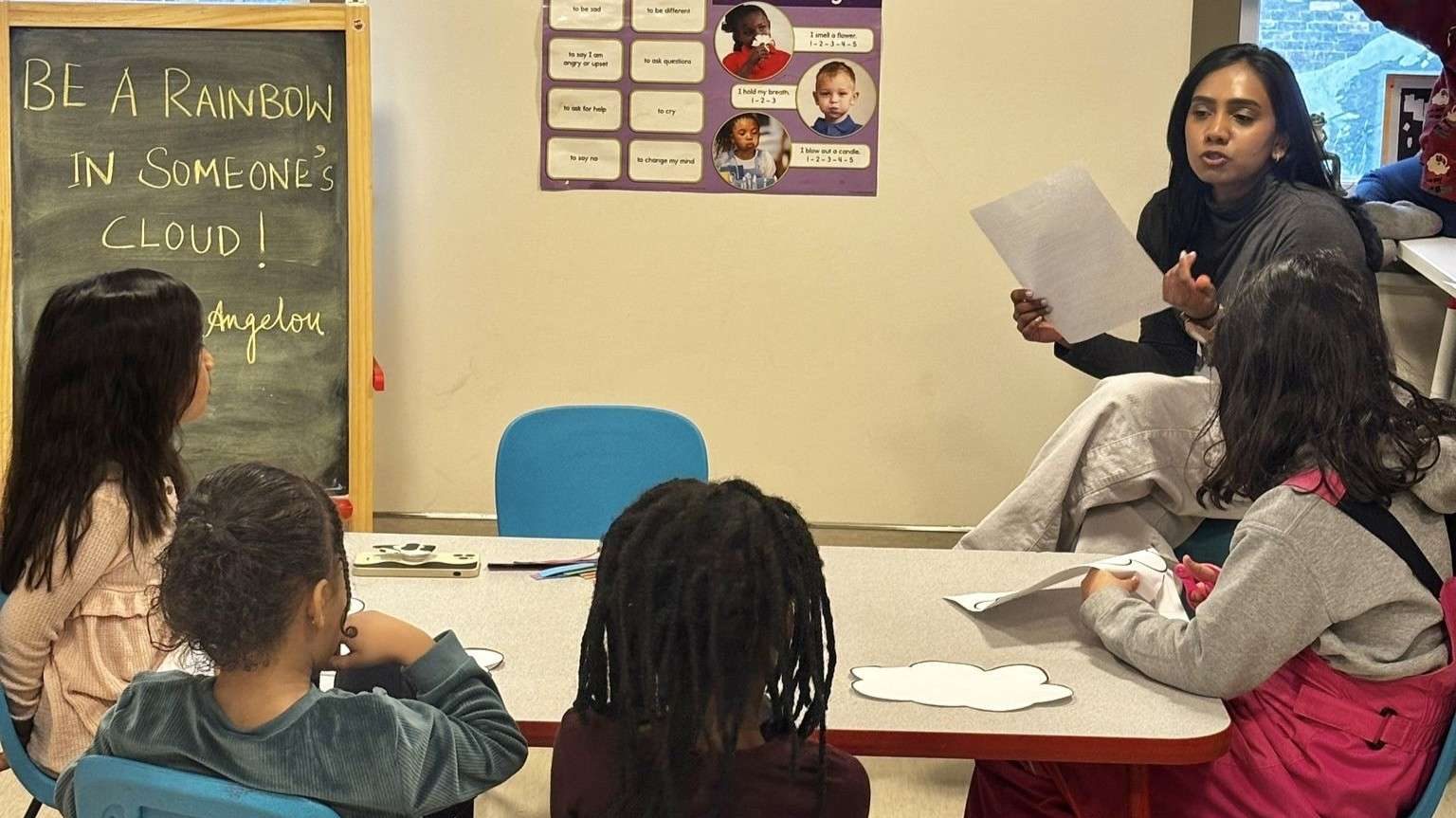
To achieve this, and to meet Henry and other kids like him where they’re at, Adheena adjusted how she runs the daily Children’s Program for all kids. Each session now begins with a group check-in, followed by a movement-based warm-up to help children release energy and settle their focus. From there, the group transitions into a main activity, with clear routines and choices built in.
Over time, this structure made a noticeable difference for Henry. With predictable routines and opportunities to move his body, he became more engaged in group activities and more confident interacting with other children. He began asking for help when he needed it, taking responsibility for his actions, and navigating moments of frustration with greater ease. Henry’s mother noticed the changes, too. As he grew more comfortable and regulated, she talked to Adheena about how she could build a more structured daily routine outside of the Children’s Program to better support him.
“Watching Henry shift from pushing others away to actually wanting to join in group play with other kids was so incredible,” Adheena explains. “It’s moments like these that remind me that healing isn’t always big and immediate, but by building trust and connection, we can help these children understand that this is a safe space to be themselves.”
*Name changed to protect privacy